Australian researchers have identified seven core factors that shape how well people age, challenging the long‑held belief that physical health is the primary driver of wellbeing in later life.
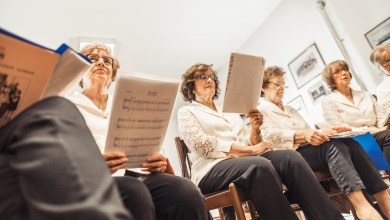
The study, led by Federation University, found that autonomy, purpose, independence, reasonable health, positive attitudes, active involvement and social connectedness are all central to ageing well.
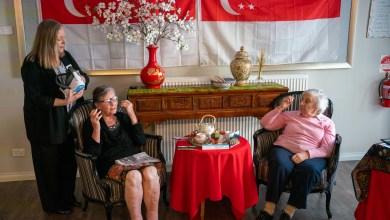
The research drew on the experiences of 722 Australians aged 65 to 98, including 13 Holocaust survivors who, despite extreme early‑life adversity, mostly reported that they considered themselves to be ageing well. Researchers say this highlights the resilience and complexity of later‑life wellbeing.
Lead researcher Dr Chloe Waddell said the findings offer a more complete understanding of what older Australians value.
“As our population lives longer, it is important to understand how to support people in their later years. But there has long been a lack of consensus about what ageing well actually means,” she said.
“Past ideas of ageing well were that you had to be in perfect health. This research shows that feeling connected, having purpose and retaining control over your own life can be just as important.”
The study found that ageing well is not a fixed state but a dynamic process that exists on a continuum. Most participants, regardless of gender or health status, believed they were ageing well. For Holocaust survivors, themes such as belonging, autonomy, active involvement and mental toughness were especially strong.
Dr Waddell said the findings provide a clearer framework for policymakers, aged care providers and carers.
“Later life can be meaningful, connected and fulfilling, even after a lifetime of adversity, if the right supports are in place,” she said.
GPs say social connection now a critical health issue
The Royal Australian College of GPs (RACGP) has also warned that loneliness and social isolation have become a major public health challenge. The RACGP is calling for social prescribing to be recognised as an essential part of modern healthcare.
Loneliness affects one in three Australian adults and two in five young people. Evidence shows the health impact is worse than smoking 15 cigarettes a day. Globally, social disconnection is linked to an estimated 870,000 deaths each year.
Dr Kuljit Singh, chair of RACGP Specific Interests Social Prescribing, said GPs see the effects of isolation on patients every day.
“GPs do not just treat disease. We care for people within the context of their lives,” she said.
“Loneliness, isolation, financial stress and lack of community connection all have profound impacts on physical and mental health.”
The RACGP is calling for social determinants of health to be embedded in medical software from the moment a patient registers. This would allow GPs to routinely identify issues such as housing insecurity, food access, transport barriers, loneliness and stress.
The College emphasised that practical social prescribing can begin immediately. Examples include referrals to local walking or cycling groups, shared medical appointments that build peer support, and stronger partnerships with community and aged care organisations.
“Activities involving movement, nature, arts, culture, education and heritage are not extras. They are evidence-based interventions,” Dr Singh said.
“Recognising community connection as healthcare is a critical step toward a healthier and more resilient Australia.”
Email: rebecca.cox@news.com.au