
Aged care leaders warn fuel costs are putting essential care at risk
They are calling for aged care workers and providers to be recognised as essential services and be prioritised for fuel access

Australia’s escalating fuel crisis is placing older people at growing risk, with aged care providers warning that soaring prices, empty petrol stations and potential rationing could disrupt essential care for hundreds of thousands of older Australians.
Despite federal assurances that Australia remains “fuel secure”, the number of service stations running dry continues to climb, and aged care leaders say the crisis is already hitting the workforce that older people rely on every day.
Ageing Australia chief Tom Symondson said the situation is becoming untenable for both aged care workers and the older people they support, particularly those receiving care at home or living in regional and remote communities.

“Aged care workers can’t deliver care if they can’t get to work or an older person’s home. If fuel access is disrupted, so is care – it’s that simple,” he said.
“We are already seeing workers turning down shifts because they can’t afford the petrol to get there.”
Some providers report their monthly fuel bills have risen by 50 per cent or more, while others warn that localised fuel shortages are making it harder for staff to travel between clients. With talk of potential rationing measures, the sector is urging governments to prioritise aged care workers and providers for fuel access.
“This is an essential service and it must be treated like one,” Mr Symondson said.
Older people face growing vulnerability
The crisis is particularly acute for older Australians who rely on daily home support, including meals, medication management, personal care, transport and social support. Many live alone, far from public transport, and depend entirely on workers who drive long distances each day.
The Australian Nursing and Midwifery Federation (ANMF) said nurses, midwives and aged care workers are struggling to absorb the rising costs. ANMF federal secretary Annie Butler said the financial burden of simply getting to work is becoming “untenable”.
“In these challenging economic times, many professionals can offset costs by working remotely. But nurses, midwives and aged care workers must deliver in‑person care – 24/7,” she said.
Workers in rural and regional areas are among the hardest hit, with some driving hundreds of kilometres a day to reach older patients.
Government moves to ease pressure
The Albanese Government has announced a 26‑cent cut to the fuel excise, a move welcomed by Ageing Australia as a necessary step to ease pressure on older people and the workforce.
“Older Australians rely on providers to deliver food and care into their homes, but the fuel crisis is causing unprecedented financial pain,” Mr Symondson said.
“We can’t afford for the pumps to run dry, because older people won’t get the care they need.”
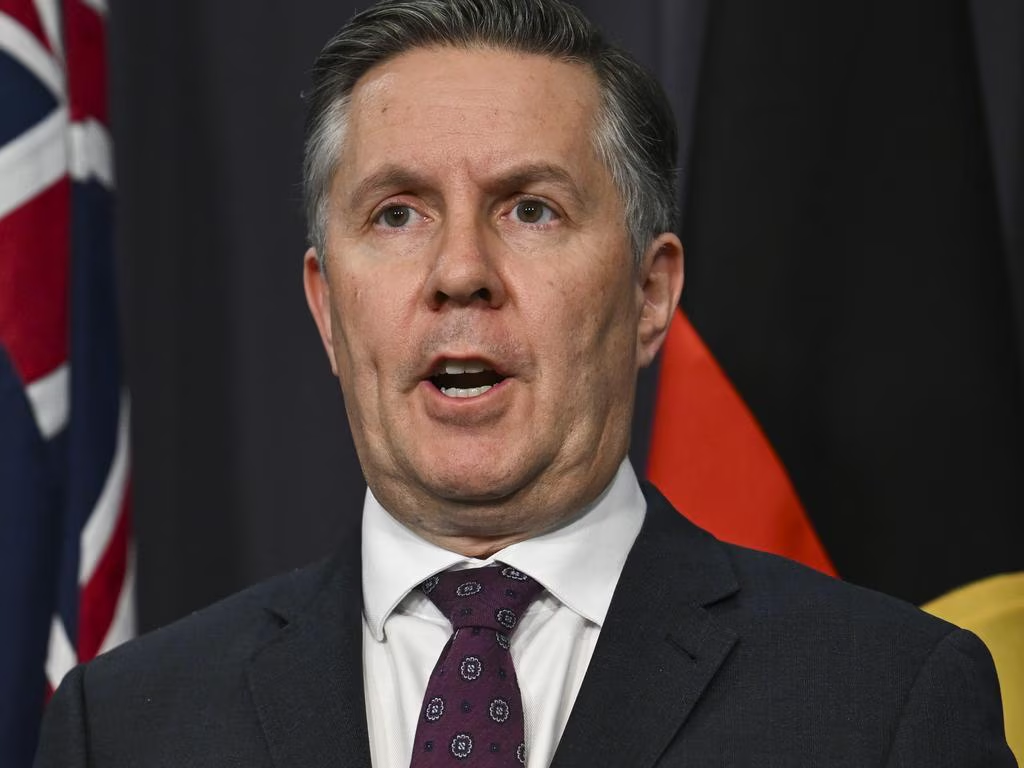
But the government has also urged calm, with Aged Care and Seniors Minister Sam Rae telling Sky News that Australia is “not running out of fuel”, and that panic buying is contributing to localised shortages, particularly in regional areas.
“We’ve got fuel, and we know prices are higher than any of us would like,” Senator Rae said.
“Panic buying is not the answer.”
However, aged care leaders say that without targeted support, the sector risks a repeat of the early Covid‑19 response, when aged care was not initially prioritised for essential supplies.
Sector calls for urgent, targeted support
Ageing Australia has proposed a suite of measures to protect older people during the crisis, including:
- priority access to fuel for aged care workers and providers
- exemptions from any future rationing measures
- targeted financial support to offset soaring fuel costs
- support across CHSP, Support at Home and residential aged care.
Unions are also calling for higher fuel reimbursements, tax‑deductible parking for nurses and midwives, and more flexible rostering to reduce peak‑hour travel costs.
Swinburne University organisational psychology expert Timothy Bednall says the crisis exposes a deeper structural issue: commuting costs fall almost entirely on workers.
“There isn’t a strong direct financial incentive for employers to actively support remote work,” he said – a reality that leaves frontline care workers with few options.
With demand for aged care services rising and providers already under financial strain, the fuel crisis threatens to widen existing cracks in the system.
“Without support, there is a real risk of service disruption,” Mr Symondson said.
“We must act now to ensure older Australians are not left behind.”
Email: rebecca.cox@news.com.au



Because of the Fuel crisis l am acquiring electric vehicles powered by solar energy.