Beyond grants: Minister calls for investor confidence in aged care
An independent review into accommodation pricing in residential care has been commissioned

Deteriorating facilities, constrained capital, and a system that fails to reward new bed supply, have pushed the Australian aged care sector into an accommodation crisis, the Minister for Aged Care and Seniors said.
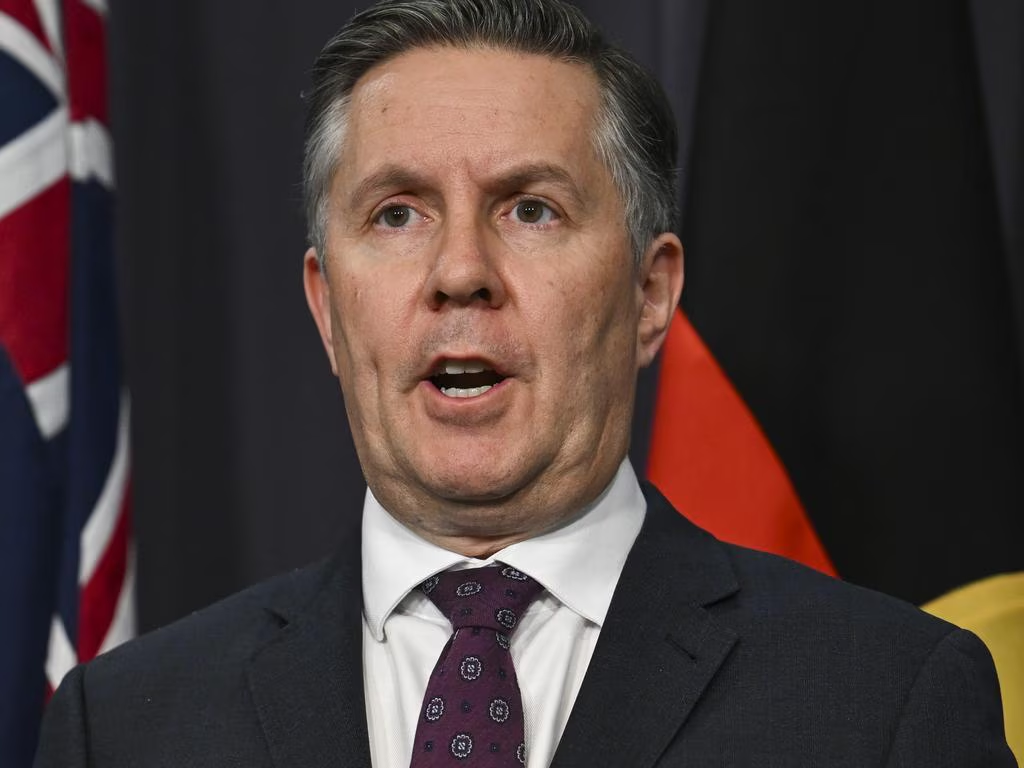
In a recent address to the Committee for Economic Development of Australia (CEDA), Minister Sam Rae highlighted the critical need for financial sustainability within the sector in the wake of the new Aged Care Act and introduction of the Support at Home program.
“Within a decade, one in five Australians will be over 65 – so a key test for the system will be whether we can build enough high-quality accommodation to meet future demand,” Minister Rae noted.
“But our infrastructure hasn’t kept up. For too long, aged care development has been held back by a system that hasn’t rewarded new bed supply and has entrenched underinvestment.”
Residential aged care shortages and the inevitable hospital ‘bed-blocks’ it creates has been top of mind in many states.
In the Top End, ‘Code Yellows’ at Royal Darwin Hospital and Palmerston Regional Hospital have been blamed on a lack of aged care. South Australian Premier Peter Malinauskas delivered a 10-point plan to the Albanese government demanding an increase in federally funded aged care beds. In WA, hospitals overflowing with older patients have fueled an ambulance ramping crisis.
Minister Rae said the cycle of underinvestment within the sector “can’t continue.”
“We need a system that supports new construction and upgrades, so that all older Australians can access care – and so providers have the confidence to build, expand and renew their services,” he said.
While government programs like the Aged Care Capital Assistance Program provide investment, Minister Rae stressed that government grants alone cannot meet the scale required, and called for the stability and transparency needed to attract private capital, referring to the aged care sector as a “quiet engine” of the Australian economy, that can grow and innovate with renewed investability.
The Minister confirmed an independent review into accommodation pricing in residential care has been commissioned by the Albanese government, which will give providers the freedom to “invest in quality without compromising affordability.”
“Too many providers are caught in the middle: expected to deliver modern, safe facilities while operating under outdated pricing assumptions that no longer reflect construction costs, land values, or the true cost of capital,” he said.
“The review will examine how we can better balance affordability for residents with the certainty and incentives that providers need to invest in high-quality accommodation.
“And importantly, it will look at how to ensure that people who are less well off are not left behind when it comes to accessing residential care.”
A key component of the government’s new funding model for Support at Home is continued government funding for 100 per cent of clinical care with the introduction of co-contributions for independence and everyday living supports for those who can afford it.
This approach, Minister Rae said, strikes a balance between financial and ethical considerations, allowing the system to support those with lower means.
“We want a model that’s fair to consumers, fair to taxpayers, and fair to the people and organisations who build and run aged care homes.”
“That’s how we make sure that in five, 10, 20 years’ time, Australians still have access to the kind of accommodation we’d want for our own parents and grandparents.”
Email: rebecca.cox@news.com.au