Minister announces extra $3-billion dollars for aged care
The money will fund an additional 5000 aged care beds a year, with $200 million going to improve dementia supports

The Albanese Government has unveiled a $3 billion aged care package aimed at expanding bed supply and improving dementia supports. It will be funded by winding back a scheme that gives higher private health insurance rebates to people over 65.
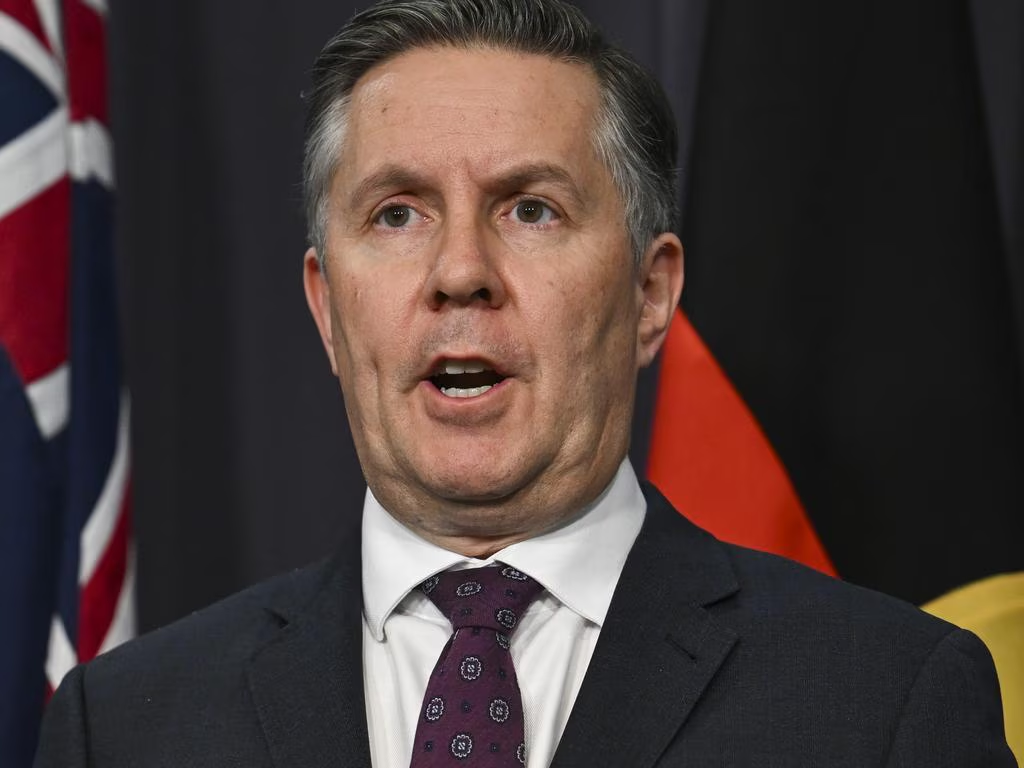
Speaking at the National Press Club on Wednesday, Minister for Health and Ageing Mark Butler warned that the number of Australians aged over 80 will grow by more than 300,000 in the next four years, which is four times the growth seen just over a decade ago.
“This budget will invest $3 billion in delivering more beds, more packages, and better care for older Australians,” the Minister said.
“Dignity in older age – through a world class aged care system – is the least our parents and grandparents deserve.”
A central feature of the upcoming Budget is a commitment to the construction of 5000 new residential aged‑care beds each year, which will be backed by new targeted capital subsidies and an increase to the Accommodation Supplement.
These measures form the government’s initial response to the Independent Review of Residential Aged Care Accommodation Pricing, which was released yesterday.
The Review recommends stronger incentives for providers to build and refurbish homes, particularly for residents with limited financial means.
Minister for Aged Care and Seniors Sam Rae said the sector’s current trajectory is unsustainable without major expansion.
“We need about 10,000 aged care beds a year coming online to meet demand and last year we only got about 800,” he told ABC News Breakfast.
“There’s definitely significant work to be done here.”
Minister Rae said the government was working closely with states and territories to address delayed discharges from hospitals, or ‘bed blocking’, but cautioned against framing older people as a burden.
“Older people have a right to access healthcare in hospitals, and hospitals have always had older people in them,” he said.
Catholic Health Australia (CHA) said the funding changes will significantly benefit residents of not-for-profit aged care facilities that are supporting the most vulnerable older Australians.
“Providers caring for higher numbers of supported residents face significantly greater financial and operational pressures, driven by higher care costs and lower accommodation revenue,” CHA director of aged care Alex Lynch said.
“This extra support is vital to ensuring disadvantaged residents get the care they need.”
The Budget will also inject more than $200 million into the expansion of dementia‑specific services, including 20 new Specialist Dementia Care Program units and an expansion of the Hospital to Aged Care Dementia Support Program.
For the workforce, the expansion is expected to relieve pressure on mainstream residential facilities that often manage complex dementia needs without the dedicated and necessary infrastructure.
Insurance rebates cut
In a major structural shift, the government will wind back the higher private health insurance rebate currently paid to Australians over 65, returning it to the standard rate and redirecting the savings into aged care.
Minister Butler said the current arrangement is “harder to defend” in 2026 and does not reflect intergenerational fairness.
“It’s simply not the best way to spend precious taxpayers’ dollars on behalf of older Australians when we need to do so much heavy lifting in aged care,” he said.
Private Healthcare Australia (PHA) has pushed back on the announcement, arguing that “reducing funding that goes directly to patients for private hospital and medical care will place further strain on an already pressured sector.”
PHA estimates suggest more than 1.4 million older Australians will be affected by the policy changes, and insurance premiums could increase by up to $640 per year.
“It will hurt consumers, impact the viability of private hospitals, and limit health funds’ ability to deliver better patient experiences.”
Email: rebecca.cox@news.com.au